Managing Ejari Registration and Lease Renewals in the UAE
Ejari, rent cheque dates, and renewal deadlines are easy to lose. Here's how UAE teams manage lease contracts, renewals, and terminations in one CRM.
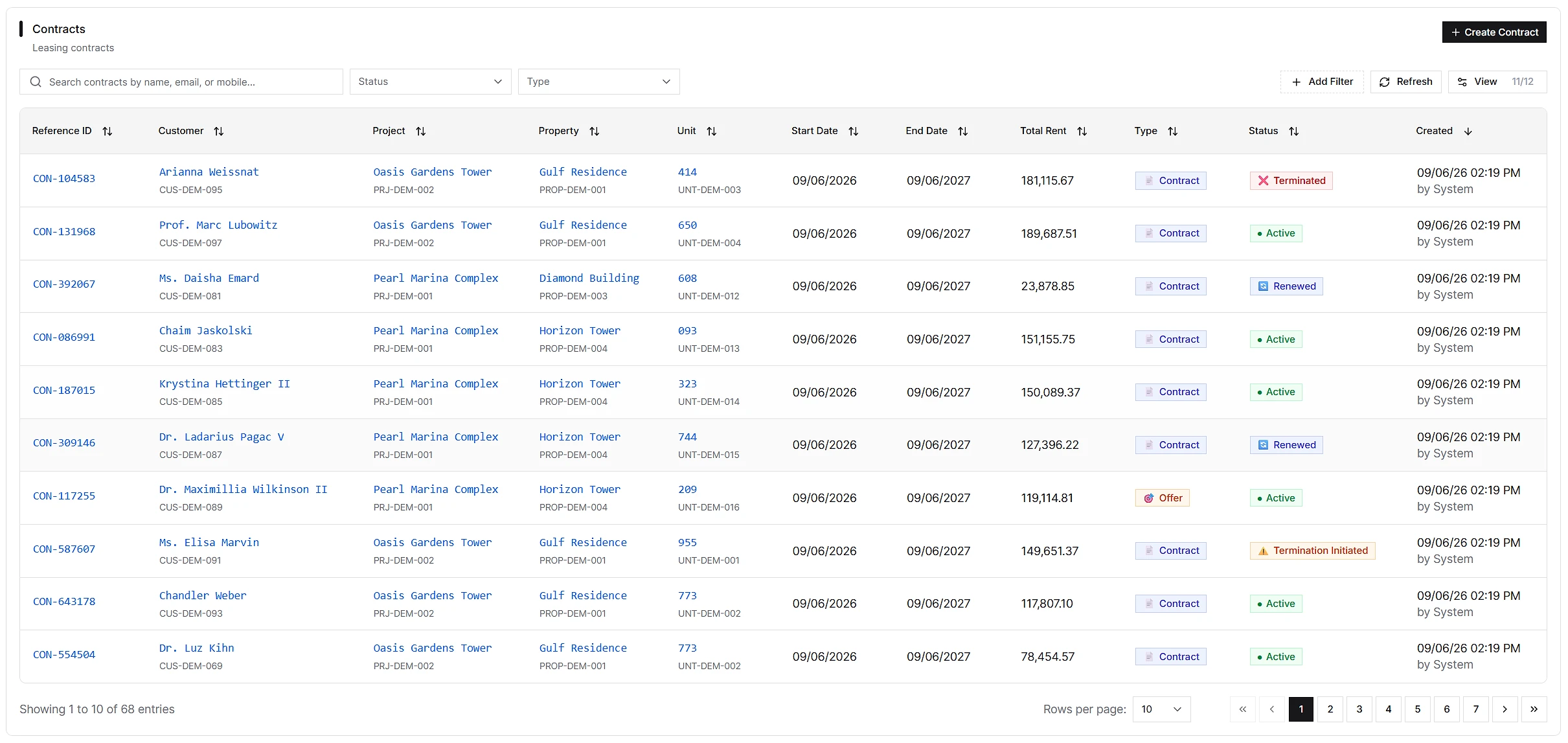
Every UAE tenancy runs on paperwork and deadlines: a registered contract, a cheque schedule, a renewal window, and — when things end early — a settlement. Miss any one of them and a smooth tenancy turns into a dispute.
Most teams manage this across a folder of PDFs, a spreadsheet of cheque dates, and someone’s memory of when each contract expires. That works until you have more than a handful of units.
A proper lease and contract workflow keeps the contract, its dates, its cheques, and its renewal all in one place — so nothing slips.
What Ejari is, and why it matters
Ejari is the system that registers tenancy contracts in Dubai, making them legally recognised. A registered contract is what tenants need for utility connections, visa processes, and dispute resolution.
For an agency or property manager, Ejari is not a one-time task. Every new tenancy and every renewal needs to be registered and kept current. If your records don’t tell you which contracts are registered and which are still pending, that gap becomes your problem at the worst possible moment.
Your system should track each contract’s status clearly, so registration is never the thing everyone forgot.
The lease dates that quietly cause problems
A single lease carries several dates that all matter:
- contract start and end
- rent cheque due dates
- renewal notice deadline
- any grace or notice period
The end date is the one everyone watches, but the renewal notice deadline is the one that causes trouble. In many tenancies, notice has to be given a set period before expiry. Miss that window and the renewal terms — or your ability to change them — can change entirely.
When these dates live inside the CRM instead of a spreadsheet, the system can surface what’s coming due instead of relying on someone to check.
Renewals should start before the contract expires
A renewal handled two weeks before expiry is a scramble. A renewal handled two months before is a conversation.
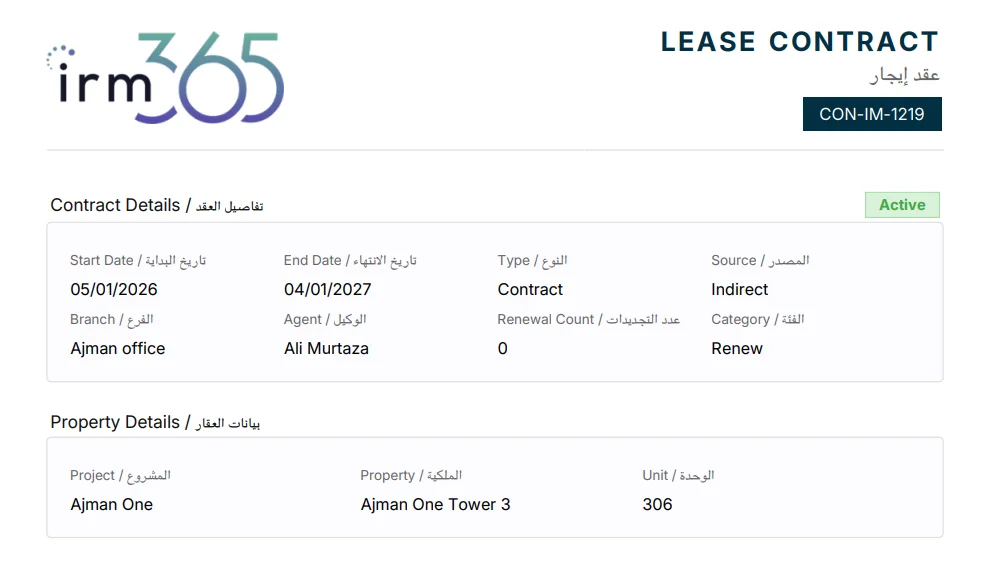
A good process flags upcoming expiries early, so agents can reach the tenant, confirm the new terms, adjust the rent if needed, and re-register the contract without a gap. IRM365 supports contract renewals as a defined workflow rather than a manual copy-paste of last year’s document.
That early visibility is also a retention tool. Tenants who are contacted ahead of time, with clear terms, are more likely to renew than tenants who hear from you only after the contract has lapsed.
Terminations need a clean settlement
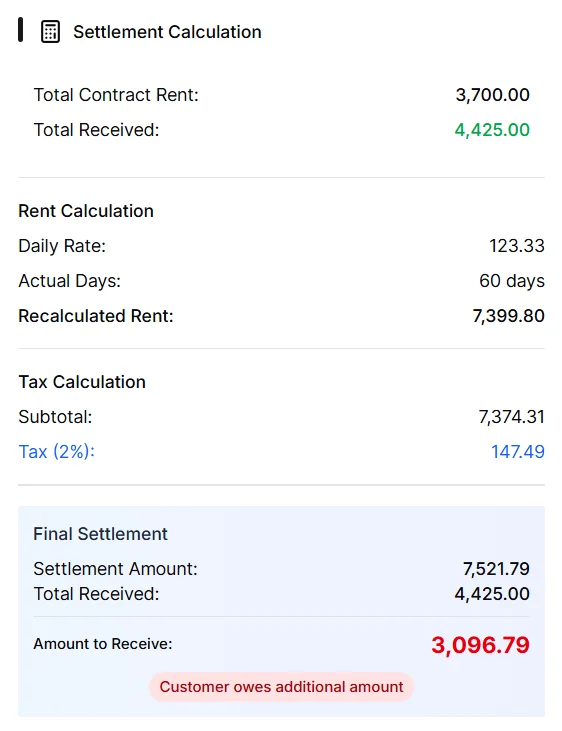
Not every tenancy runs to term. When a contract ends early, the numbers get delicate: remaining rent, unused cheques to return, a security deposit to settle, and any penalty in the agreement.
Handling that on the back of an envelope invites disputes. IRM365 treats terminations with settlement calculations, so the final figure is worked out consistently and both sides can see how it was reached.
Rent cheques and the contract belong together
In the UAE, rent is usually paid by post-dated cheques tied to the contract — one, two, four, or more instalments across the year.
Those cheques shouldn’t live in a separate spreadsheet from the contract they belong to. When cheque tracking sits alongside the lease, you can see at a glance which cheques are upcoming, which have been deposited, and which need to be returned on an early termination. That connection is part of a wider finance and collections workflow.
Ajman contracts and Tasdeeq authentication
Registration isn’t identical across every emirate. In Ajman, tenancy contracts are authenticated through Tasdeeq, and IRM365 can generate the Tasdeeq authentication PDF as part of the contract flow.
The point is that the system should reflect how each emirate actually works, instead of forcing every contract through a single Dubai-shaped process.
The bottom line
Lease management in the UAE is really deadline management: register on time, give renewal notice on time, settle terminations fairly, and keep the cheques attached to the contract they belong to.
If those live in separate places, something eventually falls through. IRM365 keeps contracts, renewals, terminations, and rent cheques together in lease management — see how it fits a complete UAE real estate platform.
The IRM365 team at VoxaSoft builds real estate CRM software for UAE agencies, brokerages, and property developers. We write about lead management, sales pipelines, finance, and UAE property operations from the workflows we ship into the product every release.
More about IRM365 →Want this workflow inside your agency?
See how IRM365 handles lead capture, activities, agreements, lease operations, finance, and reporting in one workspace.