

Post-Dated Cheque (PDC) Management for UAE Real Estate
Post-dated cheques run UAE property payments, and a missed deposit is expensive. Here's how agencies track cheque dates, status, and collections in their CRM.
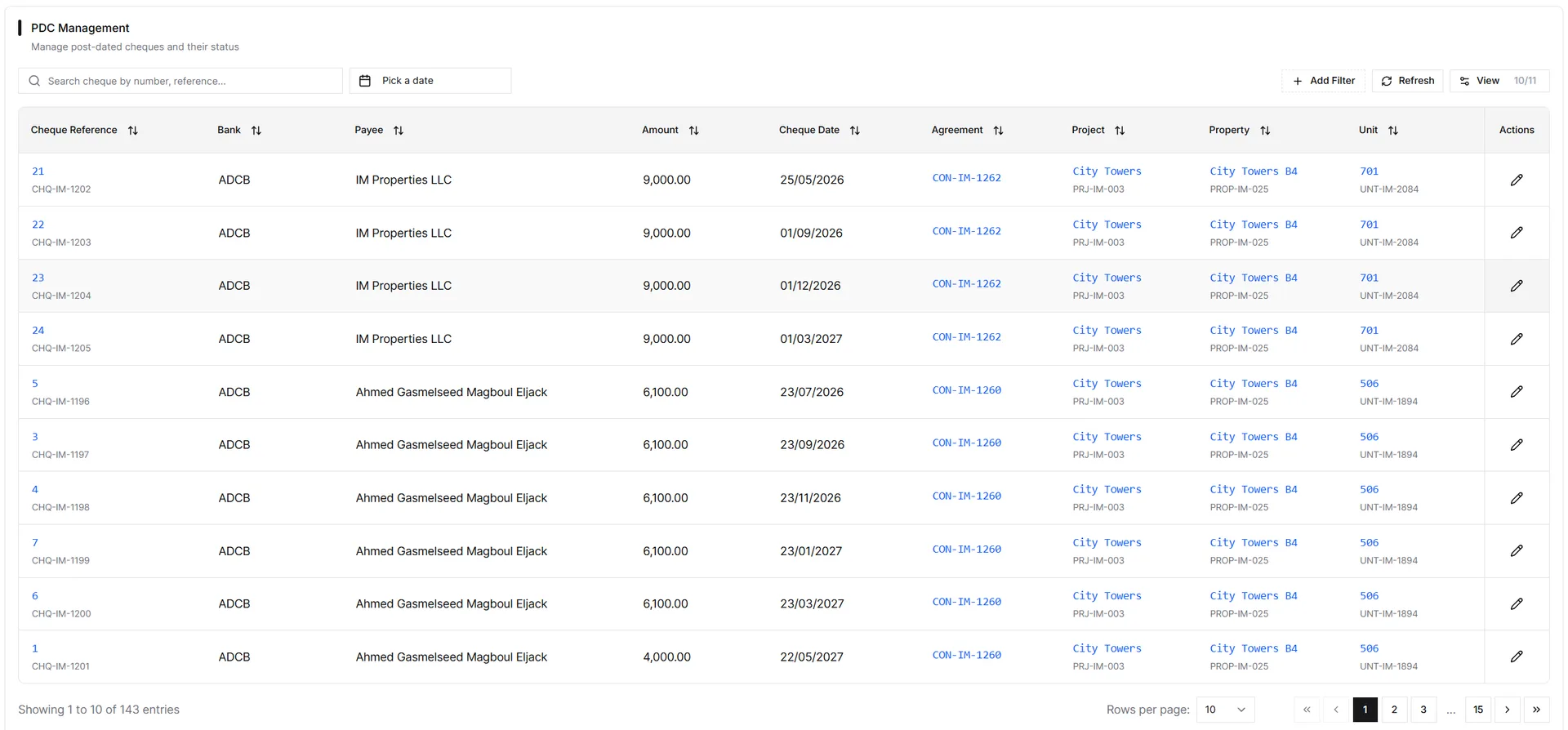
Ask any UAE property finance team what keeps them up at night and the answer is often the same: cheques. Not the deal, not the client — the stack of post-dated cheques sitting in a drawer, each one due on a different date, each one a small deadline you cannot afford to miss.
Deposit one late and cash flow slips. Miss a bounced one and you’re chasing a tenant who has already moved on. The deal was the easy part; collecting on it over twelve months is the real work.
That work belongs in a finance and collections system, not a spreadsheet.
Why post-dated cheques run UAE property deals
A post-dated cheque (PDC) is a cheque written for a future date. In UAE real estate they’re everywhere: annual rent split into four cheques, a sale settled in instalments, a reservation followed by staged payments.
For the business receiving them, a PDC is a promise with a calendar attached. The value is real, but only if the cheque is presented on the right date and clears. That turns every deal into a series of future events you have to manage — sometimes dozens of them running in parallel across your whole portfolio.
The hidden cost of tracking cheques in a spreadsheet
A spreadsheet can list cheque numbers and dates. What it can’t do is warn you, chase anyone, or connect a cheque back to the contract and client it came from.
So the real costs show up quietly:
- a cheque deposited a week late because no one was watching that row
- a bounced cheque discovered a month later, with the tenant already gone
- a security cheque returned to the wrong party on termination
- a manager who can’t answer “how much are we collecting next month?” without an afternoon of reconciliation
None of these are dramatic on their own. Together, over a year, they’re the difference between healthy cash flow and constant firefighting.
Every cheque needs a status, not just a date
A due date tells you when to act. A status tells you whether you did.
Cheque management should track each cheque through its life: pending, deposited, cleared, bounced, or returned. That single field turns a static list into something you can act on — you can see what’s due this week, what cleared, and what bounced and needs follow-up.
IRM365 handles this as cheque (PDC) management inside the finance module, so a cheque is never just a number on a page — it’s a tracked item tied to its contract, its client, and its outcome.
Instalments, receipts, and the RCD flow
Cheques rarely travel alone. They sit inside a payment plan and produce receipts when they clear.
That’s why finance in a property CRM connects a few pieces:
- instalments — the schedule the cheques pay against
- receipts — proof recorded when a payment is collected
- receipt collection and distribution (RCD) — how collected money is allocated where it belongs
When these link together, a cleared cheque updates the instalment, generates a receipt, and feeds the distribution automatically — instead of being re-keyed three times.
Cash flow you can actually forecast
The upside of tracking cheques properly isn’t just avoiding mistakes — it’s foresight.
When every future cheque carries a date, an amount, and a status, next month’s expected collections aren’t a guess. IRM365 supports cash-flow projection and logging, so managers can see what’s coming in, spot a thin month early, and plan around it.
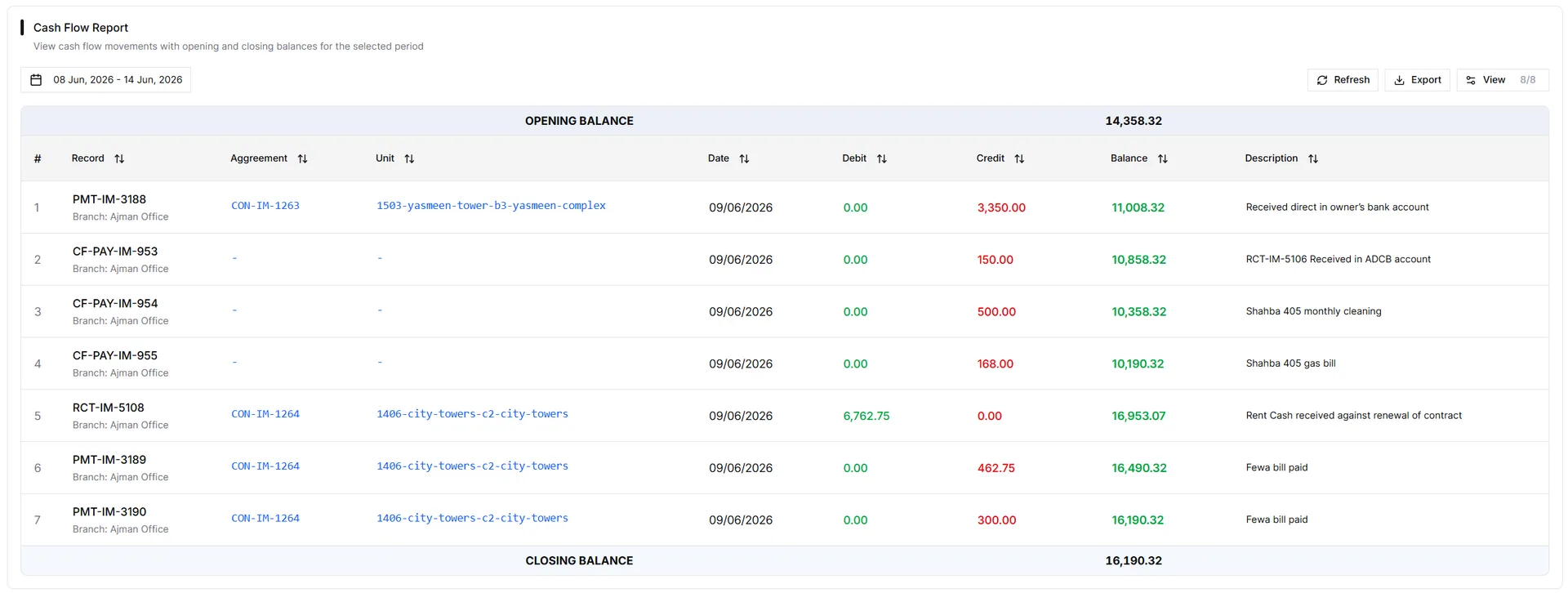
That’s the difference between reacting to cash flow and running it.
The bottom line
In the UAE, the deal closes when the contract is signed but the money arrives over months of cheques. Whoever manages those cheques well protects the margin on every deal.
Track each cheque’s date and status, tie it to its instalment and receipt, and let the system forecast what’s coming. IRM365 does this inside finance and collections — see how it supports a full real estate agency workflow.
The IRM365 team at VoxaSoft builds real estate CRM software for UAE agencies, brokerages, and property developers. We write about lead management, sales pipelines, finance, and UAE property operations from the workflows we ship into the product every release.
More about IRM365 →Want this workflow inside your agency?
See how IRM365 handles lead capture, activities, agreements, lease operations, finance, and reporting in one workspace.